/f/84976/1003x1003/2e6eb7efe1/mastering-oxygen-xml-localization_-native-dita-support-vs-traditional-workflows-index.png)
The technical documentation landscape is currently undergoing a massive structural shift. As of early 2026, the global Component Content Management Systems (CCMS) market has surged to an estimated $1.4 billion, with experts projecting it to reach over $3.4 billion by 2033 as organizations transition to modular, structured content. For technical writers and information architects using Oxygen XML Editor, the stakes have never been higher. With the finalization and widespread adoption of the DITA 2.0 standard—celebrated at the 10th anniversary of DITA-OT Day in February 2026—the complexity of managing global documentation has increased alongside the demand for real-time, multilingual delivery.
In this high-velocity environment, traditional localization methods are becoming obsolete. The "XLIFF round-trip"—once the industry standard—is increasingly seen as a liability due to its tendency to "flatten" the rich metadata and reuse mechanisms that make DITA valuable. In 2025 alone, over 30% of technical writing teams reported build failures in their DITA Open Toolkit (DITA-OT) pipelines specifically caused by improper XML tag handling during the localization process. To remain competitive in 2026, firms are transitioning to Native DITA Support, a workflow that preserves the modular integrity of Oxygen XML projects while significantly reducing time-to-market.
This guide provides a deep-dive into the architectural benefits of native localization, the technical challenges of DITA specialization, and how MotaWord’s integrated TMS delivers the precision required for the next generation of technical communication.
 The Evolution of DITA 2.0 and Oxygen XML
- The Problem with Traditional XLIFF Round-Trips
- Preserving Content Reuse: Conrefs and Keyrefs
- Comparison: Native DITA Support vs. XLIFF Conversion
- Automated Delta Detection and AI-Driven Savings
- Technical Nuances: Handling Specialization and Profiling
- Oxygen XML Localization FAQ
The Evolution of DITA 2.0 and Oxygen XML
The Darwin Information Typing Architecture (DITA) has always been defined by the strict separation of content from presentation. However, as Oxygen XML users have observed, the "technical publishing" side has become increasingly sophisticated. In 2026, the transition to DITA 2.0 introduced a more streamlined specification that eliminates deprecated features while placing greater emphasis on multimedia integration (with new <audio> and <video> elements) and semantic metadata. Localized files can no longer be treated as static text; they are functional components in an automated publishing engine.
Oxygen XML remains the preferred editor for this architecture due to its deep integration with the DITA Open Toolkit (DITA-OT). Modern technical writing teams use Oxygen not just for authoring, but for defining the very rules of their content via DTDs, Schematron, and CSS-based PDF publishing. When these complex, rule-governed files are sent for translation, the translator’s system must understand these rules natively. If the localization platform lacks native support, it ignores the structural logic of the DITA topics, leading to localized output that looks correct in a text editor but fails to compile in the DITA-OT.
Mastering localization in this era requires a move toward continuous documentation. In 2026, the goal is "Localization-Ready at Authoring-Time"—where localization constraints are considered the moment a writer opens a new topic in Oxygen XML. By leveraging native support, teams ensure that the modularity designed in Oxygen is maintained through the entire linguistic journey, avoiding the broken builds that plagued earlier documentation cycles.
The Problem with Traditional XLIFF Round-Trips
For decades, the standard workflow for localizing XML files involved converting them into XLIFF (XML Localization Interchange File Format). On paper, this sounds efficient: XLIFF protects the tags and gives the translator a clean interface. However, in practice, the round-trip from DITA to XLIFF and back to DITA is where "tag soup" and structural corruption are born.
The Fragmentation of Structural Tags
When a DITA file is converted to XLIFF, the hierarchical structure of the XML is often "flattened." This is problematic for DITA because the context of an element often defines its meaning. For instance, a <shortdesc> element in a task topic carries a different weight than a <ph> element inside a list. Many XLIFF converters fail to preserve the attributes that define these relationships, leading to translations that are linguistically accurate but structurally non-compliant with the original schema.
Build Failures and Validation Errors
In 2025, senior technical writers reported that missing brackets, corrupted processing instructions (PIs), and invalidated element nesting were the primary causes of post-localization build failures. These errors usually occur during the "back-conversion" from XLIFF to DITA. A single human error—where a translator inadvertently deletes an inline tag—can break a DITA-OT build that contains thousands of topics. Finding that single broken tag in a 500-page manual is a costly, time-consuming "needle in a haystack" operation that native workflows eliminate by bypassing conversion entirely.
Certified Translation Services?
Preserving Content Reuse: Conrefs and Keyrefs
The true power of Oxygen XML lies in its support for content reuse mechanisms like conrefs (content references) and keyrefs (key references). These elements allow a writer to "write once, use everywhere" by referencing a central warehouse of strings throughout their entire documentation set.
The "Flattening" Risk
Traditional localization workflows often "resolve" these references before translation. If a product name appears in 500 topics via a conref, the converter expands it 500 times. You not only pay to translate that name 500 times, but you also lose the modularity of your documentation. When you download the translated files, the "pointer" is gone, replaced by static text. This destroys your ability to make global updates in the target languages, forcing you to manually edit every file when a product name changes.
Native Support for Modular Relationships
MotaWord’s native DITA support treats a conref as a pointer, not as static text. Our system identifies the source topic for the conref, translates it once, and maintains the relationship in the localized version. This preserves your Information Architecture in every language. In 2026, where technical documentation is often delivered via dynamic help portals and AI chatbots, maintaining these semantic links is critical for ensuring that the "source of truth" remains unified across all localized variants.
Comparison: Native DITA Support vs. XLIFF Conversion
To understand the ROI of moving to a native workflow, technical leads must look at the total cost of ownership (TCO) of the documentation lifecycle.
| Feature | MotaWord Native DITA Support | Traditional XLIFF Round-Trip |
|---|---|---|
| Risk of Tag Corruption | Near-Zero (Raw XML processing) | High (Conversion/Back-conversion errors) |
| Respect for Conrefs/Keyrefs | Maintains modular pointers | Often "flattens" into static text |
| Build Success Rate | 100% (Validated against source schema) | Variable (Requires manual post-editing) |
| Translation Cost | Paid only for "New" content | Often pays for "flattened" duplicates |
| Delta Tracking | Automated via TMS "Diffing" | Manual file identification & export |
| Metadata Preservation | Full (Prolog, attributes, IDs) | Partial (Often lost in conversion) |
The shift to native support is a core business strategy. In a market where the telecommunication and software services sector is reaching $2.6 trillion, the speed at which you can localize and deploy technical manuals determines the speed of your global revenue growth.
Automated Delta Detection and AI-Driven Savings
One of the biggest pain points for Oxygen XML users is the "Update Cycle." When you modify 5 topics out of a 1,000-topic Ditamap, how do you handle the translation? Traditionally, this required a manual audit or a complex "Git diff" to identify changed files, followed by a manual export. This "manual delta tracking" is a primary source of administrative bloat and error in technical writing teams.
The Power of Automated "Diffing."
MotaWord’s integrated Translation Management System (TMS) automates this entire process. When you upload your updated Oxygen XML project, our engine performs a technical "diff" in seconds. It compares the current version against the previous one and identifies exactly which sentences or phrases have changed. You are presented with a quote that covers only the new or modified content.
Translation Memory (TM) and Consistency
At the heart of our TMS is your dedicated Translation Memory. In 2026, TM technology has evolved beyond simple string matching. Our system uses semantic analysis to ensure that even if a sentence is slightly rephrased, we pull the most relevant match from your history, ensuring 100% technical consistency. For Oxygen XML users, this means your localized DITA-OT outputs remain synchronized across every release, maintaining the brand voice and technical accuracy that your users depend on.
Instant Propagation
When a common warning or legal disclaimer is updated in one topic, MotaWord instantly propagates that change across every other topic in your project that uses the same string. This ensures that a critical safety update doesn't "miss" a few topics due to human oversight. By letting the TMS handle the logic of the update, your technical writers can focus on authoring rather than file management.
Technical Nuances: Handling Specialization and Profiling
Oxygen XML’s greatest strength is its ability to support DITA Specialization—the ability to define new topic types or elements tailored to a specific industry. However, specialized tags often confuse standard translation tools, which don't know whether a custom element like <hazard-rating> should be translated or treated as a non-translatable ID.
Handling Profiling Attributes
DITA uses profiling attributes (like product, platform, or audience) to control which content is published in which version. A single DITA topic might contain content for both "Beginner" and "Advanced" users, controlled by these attributes. In a native workflow, MotaWord’s engine respects these attributes. We can configure the translation process to ignore specific profiles or to treat them with unique linguistic rules, ensuring that your Conditional Text strategy remains intact in every language.
Specialized Schemas and Non-Translatable Elements
Oxygen XML allows writers to use the translate="no" attribute on specific elements. A native DITA support engine respects this flag automatically. Furthermore, our team works with your information architects to map your specialized DTDs or Schemas to our translation engine. This ensures that your custom metadata—often the lifeblood of your content delivery platform—remains untouched and functional after the localization process.
Certified Translation Services?
Oxygen XML Localization FAQ
How does MotaWord handle DITA-OT build errors?
Because we process DITA topics natively without converting them to XLIFF, the structural integrity of the XML is preserved. We validate the localized files against your source DTD or Schema before delivery. This ensures that when you drop the translated topics into your Oxygen XML project, the DITA-OT build succeeds the first time.
Can I translate an entire Ditamap at once?
Yes. You can upload your master .ditamap or .bookmap along with all referenced .dita topics and images. Our system maintains the folder hierarchy and the relationships between the map and the topics, delivering a localized project structure that is ready for immediate publishing.
How do you handle DITA conrefs and keyrefs during translation?
Our engine recognizes these as structural pointers. We translate the source content for the conref once and preserve the reference ID in the target topics. This ensures that your content reuse strategy remains modular in every language, preventing "flattening" and reducing repetitive translation costs.
Do I need to manually identify which files have changed for an update?
No. Using MotaWord’s integrated TMS, you can simply upload your entire updated project. Our smart "diffing" algorithm automatically identifies which topics or specific sentences have been modified since your last version. You only pay for the "delta" (the new or modified content).
What is the difference between DITA 1.3 and DITA 2.0 localization?
DITA 2.0 simplifies the tag set and inheritance model, making it easier for translation engines to parse and process. However, it introduces more complex metadata and multimedia attributes. MotaWord’s native support is updated for the DITA 2.0 specification, ensuring that your modern Oxygen XML projects are fully supported.
Is native DITA localization more expensive than XLIFF?
On the contrary, it is usually more cost-effective. Native support reduces the administrative overhead of file conversion and prevents the "double-billing" that occurs when content reuse (conrefs) is flattened into static text. You pay only for unique, translatable strings.
Your Path to Seamless Global Documentation
Mastering Oxygen XML localization in 2026 is about more than finding a translator who knows your industry. It is about choosing a technical partner who speaks the language of structured content. By moving away from the risky XLIFF round-trip and embracing a Native DITA Workflow, you eliminate the technical friction that stalls global releases.
At MotaWord, we bridge the gap between information architecture and linguistic excellence. We ensure that your modularity, conrefs, and specialized schemas are protected, allowing your technical documentation to scale as quickly as your innovation.
Ready to see how native DITA support can transform your Oxygen XML workflow? Upload your Ditamap for an instant quote today.
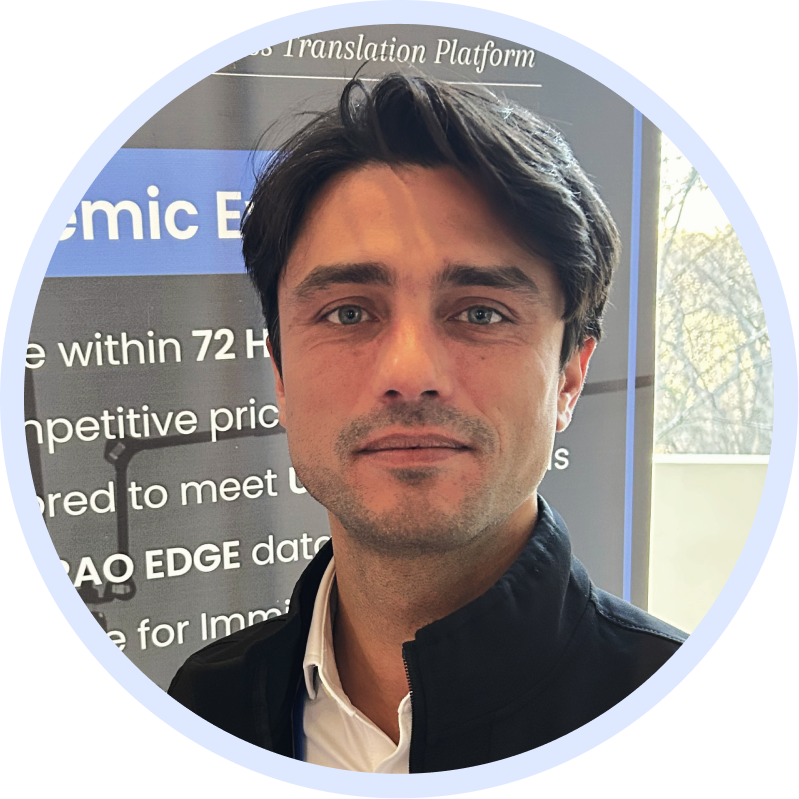
OYTUN TEZ - Chief Technology Officer (CTO) at MotaWord
Translation studies scholar with a thesis on machine translation -- overall technologist and obsessed with smart, seamless translation flows.